


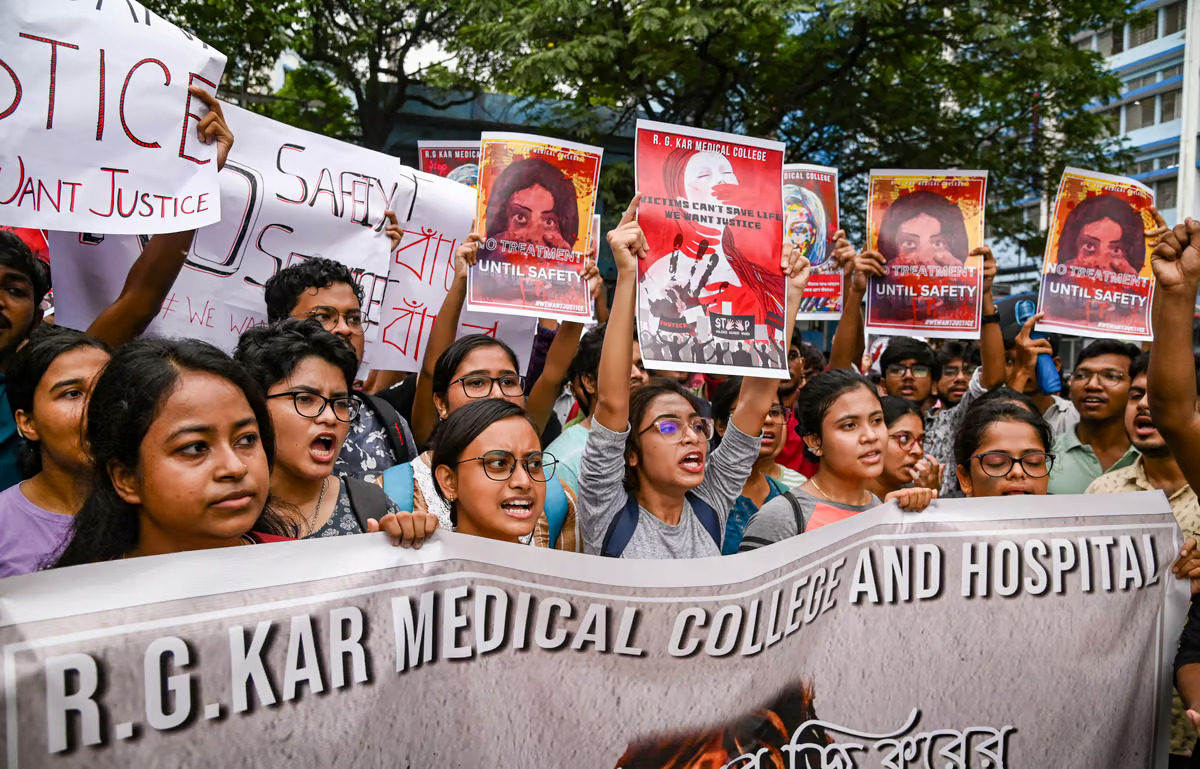
The horrifying case of the rape and murder of a female intern at RG Kar Medical College has sent shockwaves across the entire country. It’s a grim reminder of the safety challenges women face daily, especially in environments where they are meant to feel secure. For India’s already overstretched and vulnerable medical professionals, this incident raises an even deeper alarm. It’s not just about one case; it reflects a systemic failure that demands urgent attention.
In this article, we delve deeper into the complexities surrounding this case. We’ll look at the details of the verdict and explore the ripples it has sent through society. How does a single tragedy expose larger societal gaps? Why is there such a pressing need to address these gaps? Let’s unpack these questions and understand what needs to change for a safer, more equitable future.
What is the RG Kar Rape-Murder Case?
On August 9, 2024, a 31-year-old postgraduate doctor from RG Kar Medical College and Hospital Kolkata was discovered dead in a seminar room in the postgraduate quarters. The incident not only raised unsettling questions about the circumstances leading to the doctor’s death but also cast a harsh spotlight on the risks women face in their workplaces. For those in the medical profession—already burdened with demanding schedules and immense responsibilities—such incidents underscore the urgent need for robust safety measures.
The Final Verdict on RG Kar Murder Case
On January 20, 2025, the Sealdah Criminal Court delivered its much-awaited judgment in the case that had gripped the nation. Sanjay Roy, the accused, was sentenced to life imprisonment under Sections 63, 64, and 103 of the Bharatiya Nyay Sanhita. The court recognised the brutality of the crime but ruled that it did not fall under the “rarest of rare” category, which would have justified the death penalty. Justice Anirban Das, presiding over the case, emphasised that while the act was heinous, the principles of judicial reform had to be upheld.
Key Aspects of the Verdict
1. Accountability of Authorities
One of the standout aspects of the court’s 172-page judgment was its sharp criticism of the hospital administration. It called out their initial attempts to misrepresent the incident as a suicide, shedding light on systemic negligence that allowed such an environment to persist. This reprimand highlighted the pressing need for institutions to take accountability and prioritise safety over damage control. If the administration had acted responsibly from the beginning, this tragedy might have taken a different turn.
2. Justice Delivered
The court sentenced Sanjay Roy to life imprisonment, accompanied by a fine of ₹50,000. The judgment aimed to balance delivering justice to the victim while adhering to India’s judicial principles, which favour reformation over retribution. The ruling served as a reminder that while justice may not erase the pain of loss, it can be a step towards healing and systemic improvement.
3. Forensic Evidence
The CBI’s meticulous investigation played a pivotal role in securing the conviction. The case relied heavily on forensic evidence that not only identified the accused but also pieced together the events leading to the crime. This underscored the importance of robust investigative practices and the need for consistent application of such methods in future cases.
The verdict, while not without its critics, sent a strong message about accountability, justice, and the importance of safeguarding vulnerable individuals in workplaces. It was not just a judgment on one crime but a call to address the deeper issues that allow such tragedies to occur.
Also read: Sex Education for Teenagers: A Guide for Parents
Timeline of Key Events on the RG Kar Case, Kolkata
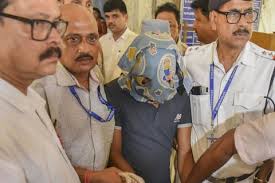
Photo Credit: The New Indian Express
The Incident
On August 9, 2024, the victim, a 31-year-old postgraduate doctor, was brutally murdered. This incident took place inside one of the seminar rooms at RG Kar Medical College and Hospital. Initially, the case was assigned to a police officer from Kolkata. However, from the very beginning, the investigation faced criticism. Allegations of bias and inefficiency quickly surfaced, leading to public pressure for a more impartial inquiry. As a result, Central Bureau of Investigation (CBI) took the case, escalating the matter to a national level.
Arrest of the Accused
The following day, on August 10, 2024, Sanjay Roy, a 33-year-old volunteer of the Kolkata Police, was arrested in connection with the crime. His arrest came after forensic evidence and testimonies unearthed during the CBI investigation pointed strongly towards his involvement. These pieces of evidence played a crucial role in building the case and securing his prosecution.
Public Protests
The heinous nature of the crime sparked outrage across the country. Protests erupted in several cities, with people from all walks of life joining in to demand justice. Physicians, already facing significant challenges in their line of duty, called for stronger workplace safety measures. The Federation of Resident Doctors’ Association took a bold stand, advocating for an indefinite strike to highlight the urgent need for protection. Emergency services continued to operate, but the solidarity among the medical community was evident as they rallied for both justice and safety reforms. You can check out their reactions to the vandalism that occurred at midnight on 14th August 2024 in the Twitter (Now, X) below. Many claimed this incident was man-made and created to remove crucial evidence!
Legal Proceeding
The case moved to the Sealdah Criminal Court, where it was argued as one of the “rarest of rare” cases by the CBI prosecutor. The prosecution pressed for the maximum penalty, citing the sheer brutality of the crime. Meanwhile, the defence leaned on the reformative principles of the Indian sentencing system to plead for a less severe punishment. The legal battle became a focal point of national attention, with many awaiting the court’s decision as a symbol of justice for the victim and a step toward systemic change.
#RGKarCollege faces vandalism and hooliganism @KolkataPolice seems to handle it with utmost soft care. @MamataOfficial #spineless system#BENGAL_HORROR @AmitShah and @narendramodi
where is law and order of nation !! pic.twitter.com/KfCKeZSURC— FORDA INDIA (@FordaIndia) August 14, 2024
Check out our new article: The Dark Truth Behind the RG Kar Rape and Murder Case
Public and Government Responses on the Kolkata Case
The verdict sparked a wave of mixed reactions across the country. While many viewed it as a hard-fought step toward justice, others criticised it for not being stringent enough. Among those dissatisfied was the state government of West Bengal, which expressed concerns that the punishment didn’t adequately reflect the brutality of the crime. They have since appealed to the Division Bench of the Calcutta High Court. They are planning to push for the death penalty for Sanjay Roy. The next hearing is on January 27, 2025.
- Protests and Strikes Continue
Meanwhile, protests by healthcare workers have shown no signs of slowing down. Physicians, nurses, and medical students have united in their call for systemic reforms to ensure safer workplaces. Many have taken to the streets, holding placards and staging sit-ins, demanding not just justice for the victim but also the implementation of meaningful safety measures to prevent such horrors in the future. The Federation of Resident Doctors’ Association has maintained pressure through ongoing strikes, reflecting the widespread unrest within the medical community. - Public Sentiment and Calls for Reform
Beyond the medical fraternity, public sentiment remains strong. People from all walks of life are calling for sweeping changes, both in legal frameworks and administrative practices, to prevent such tragedies from recurring. The need for safer work environments, faster judicial processes, and stricter accountability measures has never felt more urgent.
Parents’ Reaction
The victim’s parents, devastated by the loss of their daughter, have expressed both grief and frustration over the case. In a heartfelt statement, they described her as a bright young woman who dedicated herself to her medical career. The tragedy has left an irreplaceable void in their lives, one that no verdict can ever truly fill.
While they welcomed the court’s decision on the life imprisonment sentence, they are disappointed over the final verdict. They shared their belief that the punishment did not reflect the gravity of the crime committed against their daughter.
“We are shocked. How is this not the rarest of rare cases? An on-duty doctor was raped and murdered. We are dismayed. There was a larger conspiracy behind this crime,” her mother said during an interview, vowing to support the state government’s appeal to the Calcutta High Court.
Also read: R G Kar Murder: Beneath the White Coats
Final Thoughts
The RG Kar rape-murder case is a chilling reminder of the systemic issues that endanger women in professional spaces. While the verdict has provided a partial semblance of justice, the journey towards ensuring safety and equality is far from over. It’s a clarion call for institutions and authorities to act decisively. As the legal proceedings continue, let’s hope this case reforms safety and justice.
FAQs
Q: Who was the principal of RG Kar Medical College at the time of the incident?
A: The principal during the incident was Prof. (Dr.) Sandip Ghosh played a crucial role in navigating the crisis before the court verdict.
Q: What is the status of the RG Kar case verdict in the Supreme Court?
A: The case has been settled in the lower courts. However, any appeal to the Supreme Court would further determine its implications.
Q: How does the verdict affect current students?
A: The ruling prioritises students’ welfare and tries to make sure their education remains unaffected. But they did promise the betterment of the whole hospital’s education and safety system.
Q: Does this case impact other institutions?
A: Yes, the verdict sets a precedent for addressing governance issues in other public institutions.


Comments (0)